

Tariffs and Landed Costs: Keeping Your Amazon Margins Intact
250 prompts25 categoriesBuilt for Amazon sellers
Private landed-cost program · Interactive book + Landed-Cost Command Center
Workspace for this book: ● Available What does a workspace mean?
A workspace is your private place to solve this problem in your own business. You do not just read about the problem. You work through it, with your own facts:
- Enter your details once (unit costs, duties, freight, customs codes and selling prices).
- Pick the stage you are in.
- Get every prompt personalised to you and copy it in one click.
- Keep your records together in one place.
It opens in your TPP account right after purchase, in the language you choose.
Tariffs and duties can change your cost per unit after you have already ordered. A price that was profitable last quarter may now lose money.
Not merely a book to read: a working system for turning supplier quotes into a true landed cost, a tested tariff scenario plan and a margin floor you can defend.
- Build a complete per-unit landed cost, break-even price and margin floor for each SKU.
- Model base, higher and severe tariff scenarios before you place a purchase order.
- Copy personalized prompts in one click and check every draft against your own documents.
Available in multiple languagesSee in which languages this book is available
You may get the book in any language you prefer, including your mother tongue.
 Abkhazian (Abkhaz)
 Acehnese
 Acoli (Acholi)
 Afrikaans
 Akan (Twi)alz (Alur)
 አማርኛ (Amharic)
 العربية (Arabic)
 অসমীয়া (Assamese)Awadhi
 Aymara
 azərbaycan (Azerbaijani)
 башҡорт (Bashkir)BalineseBatak Toba
 беларуская (Belarusian)
 Ichibemba (Bemba)Betawi
 български (Bulgarian)भोजपुरी (Bhojpuri)
 Bikol
 bamanakan (Bambara)
 বাংলা (Bengali)
 brezhoneg (Breton)
 bosanski (Bosnian)bts (Batak Simalungun)btx (Batak Karo)буряад (Buryat)
 català (Catalan)CebuanoRukiga (Kiga)Mari (Meadow Mari)
 کوردیی ناوەندی (Kurdish (Sorani))
 cnh (Hakha Chin)Corsican
 Crimean Tatar
 Seselwa Creole French (Seychellois Creole)
 čeština (Czech)чӑваш чӗлхи (Chuvash)
 Cymraeg (Welsh)
 dansk (Danish)
 Deutsch (German)
 Dinkaडोगरी (Dogri)dov (Dombe)
 Divehi (Dhivehi)
 རྫོང་ཁ (Dzongkha)
 eʋegbe (Ewe)
 Ελληνικά (Greek)
 English
 Esperantoespañol (Spanish)
 eesti (Estonian)euskara (Basque)
 فارسی (Persian)
 Pulaar (Fulani)
 suomi (Finnish)Filipino
 Fijianfrançais (French)
 français (Canada) (French (Canada))
 Frysk (Frisian)
 Gaeilge (Irish)Gã (Ga)Gàidhlig (Scots Gaelic)galego (Galician)
 Guaraniकोंकणी (Konkani)ગુજરાતી (Gujarati)
 HausaʻŌlelo Hawaiʻi (Hawaiian)
 עברית (Hebrew)हिन्दी (Hindi)HiligaynonHmong
 hrvatski (Croatian)hrx (Hunsrik)
 Haitian Creole
 magyar (Hungarian)
 հայերեն (Armenian)Indonesia (Indonesian)IgboIloko (Ilocano)
 íslenska (Icelandic)
 italiano (Italian)עברית (Hebrew)
 日本語 (Japanese)Jawa (Javanese)Jawa (Javanese)ქართული (Georgian)
 қазақ тілі (Kazakh)
 ខ្មែរ (Khmer)ಕನ್ನಡ (Kannada)
 한국어 (Korean)
 Krio
 ktu (Kituba)
 kurdî (kurmancî) (Kurdish (Kurmanji))
 кыргызча (Kyrgyz)
 Latin
 Lëtzebuergesch (Luxembourgish)Luganda
 Limburgishligure (Ligurian)Lombardlingála (Lingala)
 ລາວ (Lao)
 lietuvių (Lithuanian)
 Latgalian
 Dholuo (Luo)Mizolatviešu (Latvian)मैथिली (Maithili)Makasar (Makassar)
 Malagasy
 Māori (Maori)Minangkabau (Minang)
 македонски (Macedonian)മലയാളം (Malayalam)
 монгол (Mongolian)মৈতৈলোন্ (মীতৈ ময়েক) (Meiteilon (Manipuri))मराठी (Marathi)
 Melayu (Malay)Melayu (Arab) (Malay (Jawi))
 Malti (Maltese)
 မြန်မာ (Myanmar (Burmese))
 नेपाली (Nepali)Newari (Nepalbhasa (Newari))Nederlands (Dutch)
 norsk (Norwegian)South Ndebele (Ndebele (South))Sesotho sa Leboa (Sepedi)Thok Nath (Nuer)
 Nyanja (Chichewa)occitanOromoo (Oromo)ଓଡ଼ିଆ (Odia (Oriya))ਪੰਜਾਬੀ (Punjabi (Gurmukhi))
 پنجابی (عربی) (Punjabi (Shahmukhi))PangasinanPampanga (Kapampangan)
 Papiamento
 polski (Polish)
 پښتو (Pashto)
 português (Portuguese (Brazil))português (Portugal) (Portuguese (Portugal))
 Runasimi (Quechua)
 Ikirundi (Rundi)
 română (Romanian)Romany (Romani)русский (Russian)
 Ikinyarwanda (Kinyarwanda)संस्कृत भाषा (Sanskrit)sicilianu (Sicilian)سنڌي (Sindhi)
 Sängö (Sango)တႆး (Shan)
 සිංහල (Sinhala)
 slovenčina (Slovak)
 slovenščina (Slovenian)
 Samoan
 chiShona (Shona)
 Soomaali (Somali)
 shqip (Albanian)
 српски (Serbian)
 SwatiSesothoBasa Sunda (Sundanese)
 svenska (Swedish)
 Kiswahili (Swahili)ślōnski (Silesian)தமிழ் (Tamil)తెలుగు (Telugu)
 Tetum
 тоҷикӣ (Tajik)
 ไทย (Thai)
 ትግርኛ (Tigrinya)
 türkmen dili (Turkmen)Filipino
 Setswana (Tswana)Türkçe (Turkish)Tsongaтатар (Tatar)ئۇيغۇرچە (Uyghur)українська (Ukrainian)اردو (Urdu)
 o‘zbek (Uzbek)
 Tiếng Việt (Vietnamese)IsiXhosa (Xhosa)ייִדיש (Yiddish)Èdè Yorùbá (Yoruba)
 yua (Yucatec Maya)
 粵語 (Cantonese)中文 (Chinese (Simplified))中文(中国) (Chinese (Simplified))
 中文(台灣) (Chinese (Traditional))isiZulu (Zulu)
No matching language found.
Synopsis
A supplier quote is not a cost. Freight, insurance, duty, customs fees, brokerage and Amazon's own fees all arrive later, and a change in tariffs can turn a healthy-looking listing into a loss. Most importers are left stitching together invoices and advice while the next order is already being placed.
This playbook turns that pressure into a structured program. Inside its Landed-Cost Command Center, Amazon importers can enter their products, costs and dates once, choose the stage they are in, and personalize prompts that help them build landed-cost worksheets, set margin floors, model tariff scenarios, renegotiate with suppliers, reprice and plan cash.
See more
Your purchase includes both the reusable interactive workspace and the complete digital book as a PDF.
The 25 categories run from landed-cost method, classification and origin, through scenarios, sourcing and entry strategy, to repricing, cash planning, monitoring and valuation impact. The book is educational: it is not legal, tax, customs or financial advice, it is not affiliated with Amazon, and it does not promise any particular outcome.
Free, 1 minute
Is your margin safe from cost changes? Take the 7-point Amazon check
Tick what is true for you today. Nothing is saved or sent.
Tick the statements that apply to you.
Try two complete prompts from the book
These are not teasers. Each one is a full, working prompt, word for word from the book. Copy it, fill in your own details and use it in ChatGPT, Claude, Gemini or any AI tool. Inside the book you get 248 more, with your own details filled in for you.
Try it with your own details: click any highlighted field and type. The prompt updates as you type, and “Copy this prompt” copies your version. Nothing is saved or sent anywhere.
Category 1: True Landed-Cost Calculation MethodologyPrompt 1 of 10: Building a Complete Per-Unit Landed-Cost Worksheet+
I import product name from country of origin and I need to build a complete, defensible per-unit landed-cost worksheet before I make any pricing or sourcing decision. Act as a senior import cost accountant who has built landed-cost models for hundreds of Amazon private-label SKUs and knows every cost component customs and freight invoices can hide. I sell this product on Amazon and my current pricing is based mostly on my supplier's quoted unit cost, which I know is not my real cost.
Here is my situation: my supplier's invoice unit price is supplier unit price, I am shipping shipment quantity units in this shipment, my total freight quote is total freight cost, my cargo insurance premium is insurance cost, my HS code is hs code with a duty rate of duty rate percent, and my customs broker's quoted brokerage and MPF/HMF fees total brokerage and fees. I also pay inland trucking cost to move the goods from the port to my warehouse or FBA inbound location.
Before you calculate anything, ask me to confirm any figure that looks inconsistent with typical costs for a shipment of this size and value, and ask whether any number is an estimate rather than a confirmed invoice amount.
Reason step by step: first, convert every shared or lump-sum cost, including freight, insurance, brokerage, and trucking, into a per-unit figure by dividing by shipment quantity; second, calculate the dutiable value and apply duty rate percent to get per-unit duty; third, sum every component into one true landed cost per unit; fourth, flag any component that looks unusually high or low relative to the others and explain why that matters for my pricing.
Output your answer as a cost-stack table listing each component name, its total shipment cost, and its per-unit allocation, followed by one clearly bolded true landed cost per unit figure, and a short paragraph explaining the two biggest cost drivers in my stack.
Before presenting your final answer, self-check that every dollar amount I gave you appears somewhere in the table, that your per-unit math divides correctly by shipment quantity, and that you have not silently omitted duty, MPF, or HMF from the total.
Complete prompt, exactly as in the book. Highlighted parts are the details you fill in. The copy button gives you the same prompt with [brackets] to fill in with your own details.
Category 4: Country-of-Origin Rules & Substantial TransformationPrompt 1 of 10: Applying the Substantial Transformation Test to a Multi-Country Product+
Act as a customs origin specialist who applies the substantial transformation test the way CBP actually applies it, based on name, character, and use, not on where the final invoice happens to be issued. I sell product name, which is assembled in assembly country using components sourced from component country list, and I need to determine its true legal country of origin.
Here is what happens in assembly country: assembly process description. Each component's origin and role in the finished product is: component origin and role list. My current customs declaration lists the country of origin as currently declared origin.
Ask me first whether the assembly process in assembly country changes the components' name, character, or use into a new and different article, or whether it is closer to simple assembly, packaging, or minor processing, since that distinction is the heart of the substantial transformation test.
Reason step by step: first, describe what the components are, individually, before assembly in terms of name, character, and use; second, describe what the finished product is, in those same terms, after assembly; third, determine whether the transformation from component to finished product meets the substantial transformation threshold, or whether it is a minor, insufficient change; fourth, state the resulting legal country of origin and compare it against currently declared origin.
Output as a structured analysis with a components-before section, a finished-product-after section, a substantial transformation determination, and a clear final origin conclusion, flagging explicitly whether it matches or contradicts my current declaration.
Before finalizing, self-check that your determination rests on the name-character-use test itself and not on where final packaging or invoicing happens, since those are not the legal test.
Complete prompt, exactly as in the book. Highlighted parts are the details you fill in. The copy button gives you the same prompt with [brackets] to fill in with your own details.
Review every answer against your own records and the current Amazon terms and policies.
Behind the book
How this book was made
Two teams work behind every Prompt Powerhouse book. Sabbir Mahmud Srabon owns and publishes it.
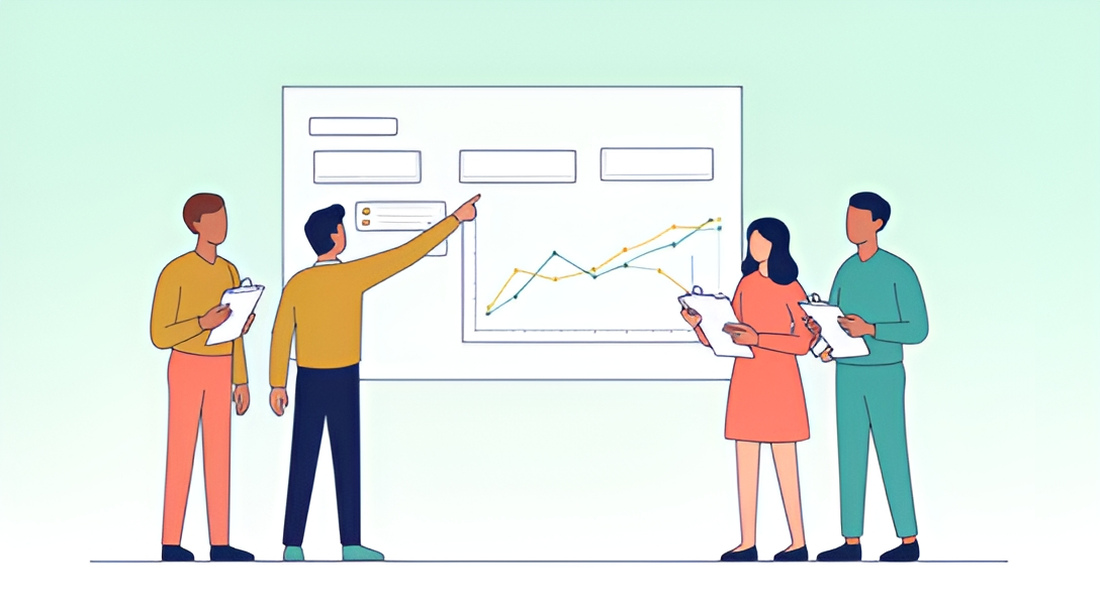
Words from the problem research team
Costs change after the order is placed
Cost changes are easy to miss until a statement shows them. A clear landed-cost model and scenario tests let you act early instead of absorbing the loss.
We map where sellers run into this problem, then break it into 25 stages you can act on, from “True Landed-Cost Calculation Methodology” to “Exit, Acquisition & Business-Valuation Impact of Tariff Exposure”.
Seen this problem in your own business, or know something we missed? Write to our problem research team: [email protected]
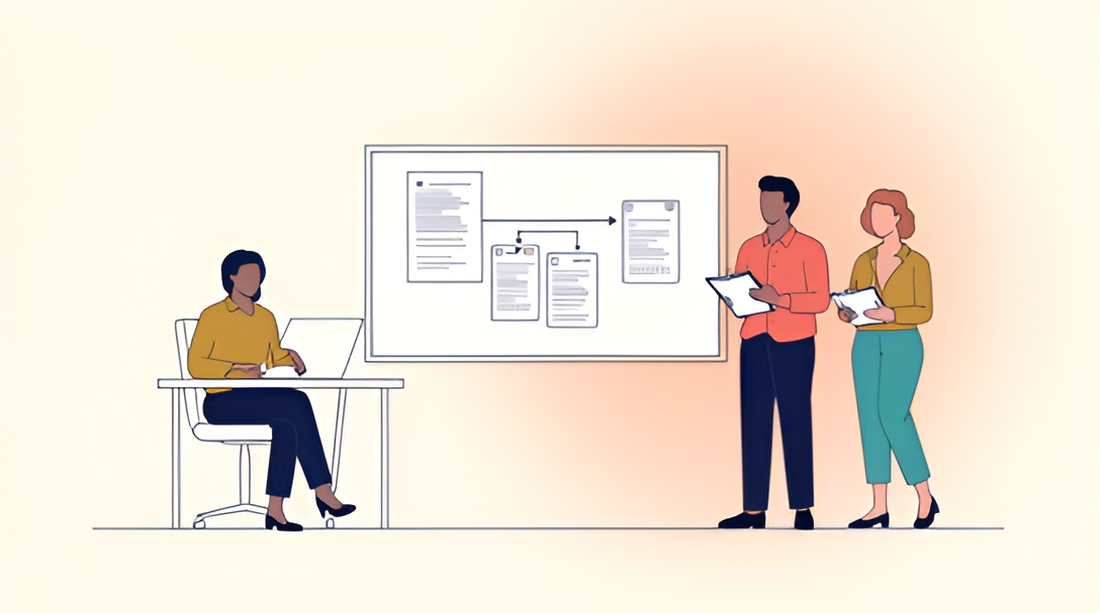
Words from the author team of this book
Prompts that rebuild landed cost and margin
Every one of the 250 prompts asks for your details first, so the answers are about your business, your records and your numbers, not about a stranger.
No hype here. The program is educational and is not affiliated with Amazon. It cannot guarantee any result, but it does give you a clear route to act on.
Questions about the prompts in this book, or an idea to make them better? Write to our author team: [email protected]
250ready-to-use prompts
25categories, one for each stage of the problem
780+fill-in details that personalise every prompt to you
10prompts in every category
Every category covers one stage of the problem, from “True Landed-Cost Calculation Methodology” to “Exit, Acquisition & Business-Valuation Impact of Tariff Exposure”.
What makes it different
More than an eBook. Your private landed-cost program.
Move from scattered invoices to a clear, honest, well-documented cost model without rebuilding the process yourself.
1Build the costTurn quotes and invoices into a true landed cost.
2Add your detailsReplace guided variables with your own products and costs.
3Personalize and copyTurn the framework into a ready-to-use prompt in one click.
4Work through every stageCalculate, plan, optimize, reprice and govern — all in one place.
Both experiences are included: use the live Landed-Cost Command Center to complete the work, and request the traditional digital PDF book whenever you want it.
Questions before you buy
Is this just a list of ChatGPT prompts?
The prompts work in any AI tool you already use. What the book adds is the structure: they are organised into 25 stages of the problem, and the workspace holds your details so you enter them once and they fill every prompt (780+ variables). You also keep your records in the same place.
Which AI tools does it work with?
ChatGPT, Claude, Gemini and local models. Any tool that accepts text works.
Is it a subscription?
No. The complete program is a one-time purchase with lifetime eligible workspace updates.
Why do I need an account?
Your account creates your private workspace and uses your name and username to personalise the book for you. It takes about 20 seconds, then you pay securely with Paddle.
What if it turns out not to fit me?
Yes, we’ve got you. If it is the very first book you purchase on TPP and it does not help your business, email us at [email protected] and we’ll refund you in full.
Will it fix my problem?
It cannot promise results. It gives you a clear, step-by-step way to find the cause, gather the evidence and take action. It is educational and not affiliated with Amazon.
Can I get the book in my language and as a PDF?
Yes. The workspace is available in many languages (see the language picker near the title), and you can request the complete book as a PDF by email whenever you like.
Become a Founding Entrepreneur
This book is new. We are inviting a small group of entrepreneurs to put it to work in their own business and tell us honestly what happened. Their words will appear here, with their permission, and only if they are real.
Want to be one of them? Tell us about your Amazon business.
Apply as a Founding EntrepreneurAbout this book
Book details
InteractiveFormatAmazonPlatformInstantAccess
- Author
- Sabbir Mahmud Srabon
- Publisher
- The Prompt Powerhouse
- PSBN
- PSBN-32058-1123-5129
- Workspace
- Complete private Landed-Cost Command Center included
- Delivery
- Interactive account access plus PDF edition
- Purchase
- One-time complete-program ownership
Languages
You may get the book in any language you prefer, including your mother tongue.
See the full language availability near the book titleWhat is a Magical Workspace?
1
Choose your stageOpen the stage closest to where you are: calculate, plan, optimize, reprice or govern.
2
Add your detailsEnter products, costs, tariff codes and dates once; they fill every prompt.
3
Review and copyCheck the personalized prompt, then take it to your AI tool in one click.
4
Keep your recordsSave worksheets, assumptions and decisions as you go.
Explore this book before purchasing
The 25 categories inside the playbook
True Landed-Cost Calculation MethodologyBreak-Even & Margin-Floor Modeling Per SKUHS-Code Classification Accuracy & AuditCountry-of-Origin Rules & Substantial TransformationIncoterms & Duty-Base OptimizationFirst Sale Valuation & Customs Value ReductionLanded-Cost-Aware Product Research & Launch DecisionsTariff Scenario Modeling Before Purchase OrdersCountry Diversification & Dual-Sourcing StrategySupplier Cost & Term Renegotiation Under Rising DutiesFront-Loading & Inventory Timing Around Policy Change DatesDe Minimis & Entry-Type StrategyDuty Drawback & Recovery ProgramsBonded Warehouses & Foreign Trade ZonesCustoms Broker & Compliance Partner ManagementRepricing to Protect Margin Without Losing Buy Box / Featured OfferCommunicating Cost-Driven Price Increases to CustomersContract & Wholesale Account Renegotiation Under Tariff PressureCash Flow & Working Capital Planning for Duty Payment TimingCatalog-Wide Tariff Exposure Monitoring & AlertsTariff Risk in Financial Reporting & ForecastingInsurance, Hedging & Contractual Risk-Transfer ToolsCross-Functional Team Roles & Escalation Protocols for Tariff ShocksCompetitor & Market-Wide Tariff Impact IntelligenceExit, Acquisition & Business-Valuation Impact of Tariff Exposure
How to read and use
Purchase the complete book. Open the workspace from your TPP account, choose a language and problem, personalize the marked variables, then copy the prompt or request delivery to your email.
Customer reviews
Ready to catch what quietly slips?
Get the complete private program, interactive book, command center and optional emailed PDF.
$1724Buy Now


Research this book before purchasing
The sales page stays focused. These connected guides explain the landed-cost problem, the modeling workflow, and how the Landed-Cost Command Center turns the book into a usable program.
Complete book overviewCoverage, formats, workspace and related resources.Diagnose tariff margin leaksFind where duty and hidden costs leak margin.Landed-cost modeling workflowAn eight-step path from quote to defendable margin.Why tariffs erode Amazon marginsSix mistakes behind the squeeze.Reprice and re-source when duties riseChoose your levers on the numbers.